|
(ARA) - The chandelier is used to mark your arrival. Clad in crystal, it met you in the foyer of a well-appointed home, and then dazzled you from a power position over the dining room table. Rarely did you find a chandelier in a starter home. To see them illuminating any room other than one used for entry or dining, more unusual still.
My, how times have changed.
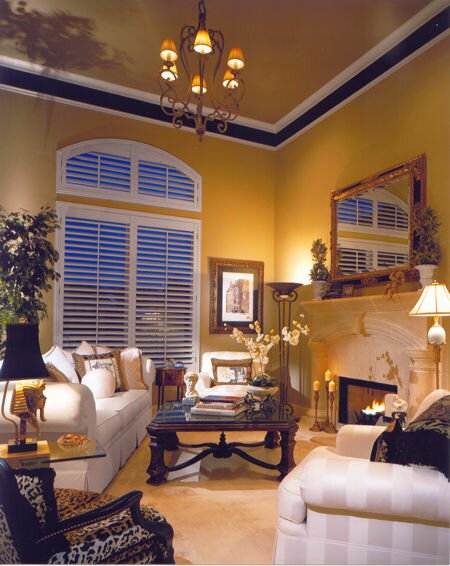
Today chandeliers rate as a brilliant idea just about anywhere -- from modest homes to magnificent mansions, contemporary digs to traditional houses. They dangle decorously in almost every room of the house. Credit our bigger-is-better building boom. Taller ceilings and increased volume in today’s homes means chandeliers are less likely to crowd a room.
|
 |
|
Clements & Associates, Inc. Interior Design - Mark Knight Photography
|
“Nine-and-10-foot ceilings almost demand something hanging to fill the space,” says Joe Rey-Barreau, educational consultant for the American Lighting Association (ALA) and assistant professor of interior design at the University of Kentucky. The ALA is a nonprofit organization dedicated to expanding public knowledge about lighting in the United States and Canada.
Colorful chandeliers create drama in the kitchen. Teeny ones provide elegance to powder rooms. Even walk-in closets go upscale when lit with a small chandelier. “Beyond laundry rooms and garages, any room is an open target for hanging a chandelier,” adds Rey-Barreau. “More commonly, kitchens and bathrooms have become the popular locations for chandeliers.”
Chandeliers add twinkle to a boudoir. “People are treating their bedroom suites as more luxurious personal spaces with elaborate bathroom areas, so it is not unreasonable to consider chandeliers there, either,” says Dan Blitzer, director of education for the ALA.
“Chandelettes,” or mini chandeliers, add a new sense of intimacy to small rooms and to corner spaces and alcoves of larger ones. “Minis are even being used as wall sconces in some instances -- and they look fantastic,” says lighting and furniture designer Sergio Orozco, whose offices are in New York City. These compact chandeliers are 9 to 12 inches in diameter to slip easily into tight spaces. For added impact, consider grouping them. “You can hang two small ones over a kitchen counter and the result is gorgeous,” says Eileen Schonbek-Beer, with Schonbek Worldwide Lighting, which has been making crystal chandeliers for 134 years. “These smaller chandeliers also work in more modest homes or where there are 8-foot ceilings.”
Chandeliers have also sized up to accommodate the soaring foyers and sweeping two-story spaces of larger homes. “The demand for massive chandeliers to fill these areas has also increased,” says Schonbek-Beer. “A 20-foot ceiling today is no longer unusual.”
The experts at the American Lighting Association have spotted the following trends in chandeliers:
Mixed Messages: Mixing of materials and styles within one fixture is now a common design trend. It is not unusual, for example, to find a rustic cast-iron fixture with crystals hanging from it, or different metals and types of glass all incorporated into one fixture.
“American styles are decidedly eclectic and homeowners today are very comfortable mixing styles,” says Blitzer. “Chandeliers lend themselves neatly to that process. You can look for a chandelier that is inspired by the period reflected in the room you are putting it, but you don’t have to. Many contemporary designs are a blend of traditional elements with modern materials -- glass and alabaster with polished chrome or satin nickel, which makes them work with a variety of styles.”
Color Me Beautiful: While sparkling clear crystal refracts and reflects light, designers offer chandeliers in a rainbow of shades to complement decor. Colored crystal can combine with clear to create a prism of hue. Smokey quartz, rock crystal and amethyst offer an antique feel.
Finish Line: Chandeliers no longer feature just one metal or just one finish. The latest looks offer multi-tone finishes created by painted or chemical processes.
Mod Squad: The freshest face in chandeliers is clean and simple, designed to work in more contemporary spaces. “We just introduced a dramatic new category of crystal product that is very contemporary,” says Schonbek. “It features colored crystal geometric shapes -- cubes, rectangles, spirals, pyramids. The colors mix together to create auras of light for a vibrant rich look.”
Dim Lit: Whether they are ornate and multi-armed or simply feature a large-scale bowl, chandeliers need a dimmer so homeowners can control the intensity of light. “Most of the time, the lighting capability of a chandelier is more than is actually necessary to light the space,” says Rey-Barreua. “They should always be controlled by a dimmer to add to the aesthetic appeal.”
Match Point: Once a design preference has been identified, the chandelier should simply be another decorative element. “There is a trend to eclectic interiors where traditional, transitional and modern will blur even within the same room,” says Rey-Barreau. “The chandelier doesn't need to "match" the decor in a very rigid manner. If it works visually for the user, then it's fine.”
For more information or to find a lighting showroom near you, call toll free (800) BRIGHT IDEAS. For a brochure on how to incorporate lighting in your life, send $2 to the American Lighting Association, PO Box 420288, Dallas, TX 75342 or visit www.americanlightingassoc.com.
The American Lighting Association is a not-for-profit association of leading manufacturers, retail lighting showrooms and sales representatives in the U.S. and Canada dedicated to expanding public knowledge about lighting.
Courtesy of ARA Content
|
|